Does Airflow whiten teeth?
Not directly. Airflow removes surface stains so the tooth's natural color shows with more luminosity. To change the actual tooth color, professional whitening is needed, often done in the same appointment after Airflow.

AS Odontología Digital · Technology
Dental cleaning with EMS technology and GBT protocol. No scraping, no classic abrasive powder, visible results from the first session.
Airflow is a dental prophylaxis technique that uses a controlled jet of air, warm water, and low-abrasion erythritol powder to remove biofilm, stains, and discoloration from the tooth surface, including accessible subgingival zones. Unlike traditional ultrasonic-and-scaler cleaning, Airflow does not scrape the tooth surface or require mechanical pressure on the gums.
We apply the Guided Biofilm Therapy (GBT) protocol developed by EMS, which structures the session into 8 steps: diagnosis, disclosure with biofilm-revealing dye, patient motivation, Airflow, Piezon (when needed), check, maintenance, and final check. Unlike a generic cleaning, it is an evidence-based, reproducible clinical protocol that prioritizes minimally invasive care.
When is it especially useful? Patients with coffee, tea, red wine, or tobacco stains. Patients with orthodontics (brackets or aligners) where biofilm accumulates in hard-to-reach zones. Patients with dental implants, where traditional scalers can damage titanium surfaces. Children and patients with dental sensitivity where classic scraping causes discomfort. And patients who simply want a more comfortable, more effective cleaning.
In a single 30–45 minute session, most patients see a visible difference in the color and shine of their teeth. It's not a whitening, but by removing superficial stains the tooth's natural color regains its luminosity. For intrinsic stains or actual whitening, we combine Airflow as a preliminary step to a professional whitening treatment.
At AS Odontología Digital, Airflow is part of a supervised prevention plan. The first visit always starts with a complete digital evaluation; from there we define the maintenance frequency, with the same treating team at every follow-up. We work as a boutique clinic, with a limited daily schedule, a model built for patients looking for continuity and long-term prevention.
Maintenance frequency depends on each patient's profile. In general we recommend a session every 4 to 6 months to maintain periodontal health and chromatic aesthetics. Patients with orthodontics, implants, or high consumption of chromogenic substances (daily coffee, wine, tobacco) benefit from shorter intervals.
The disclosing dye reveals biofilm in violet. After the Airflow GBT protocol, the surface is clean, with no scraping or abrasion.
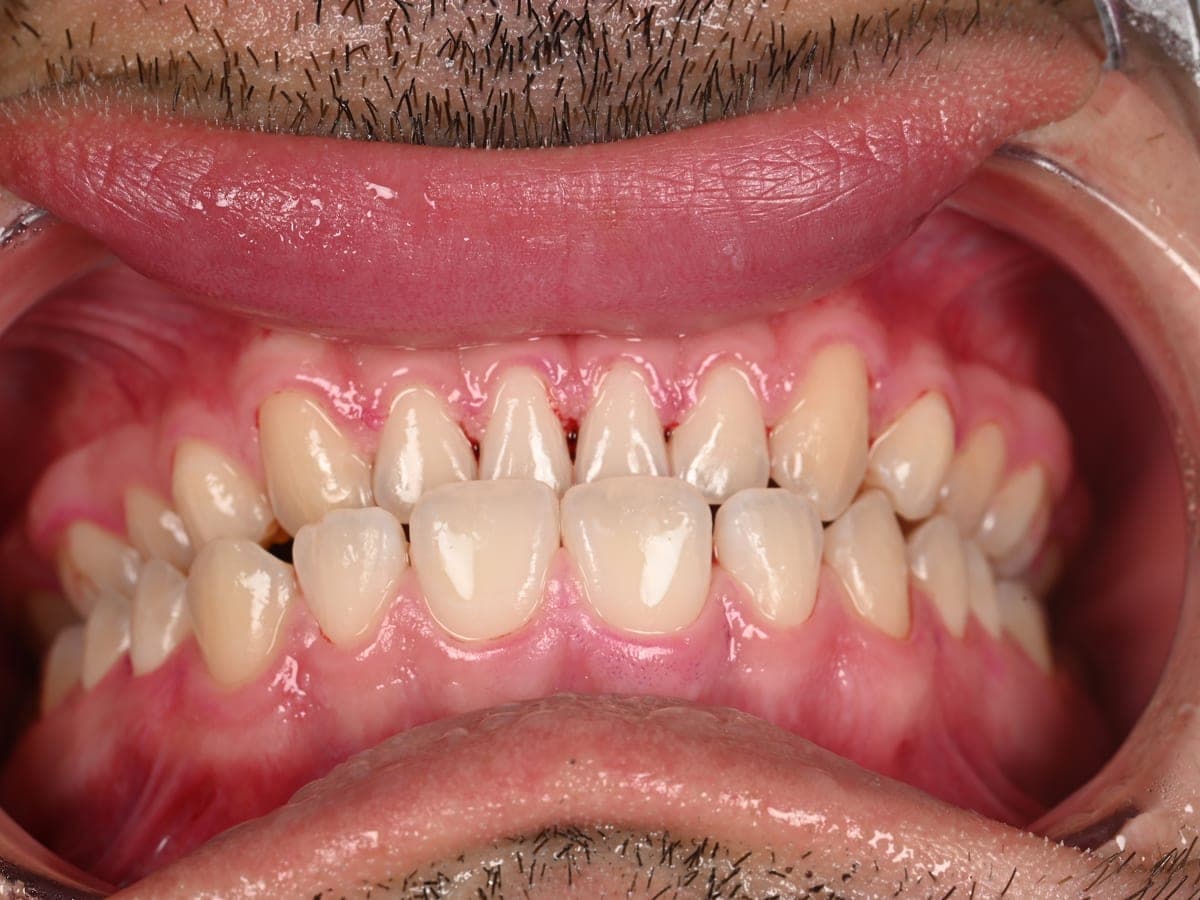
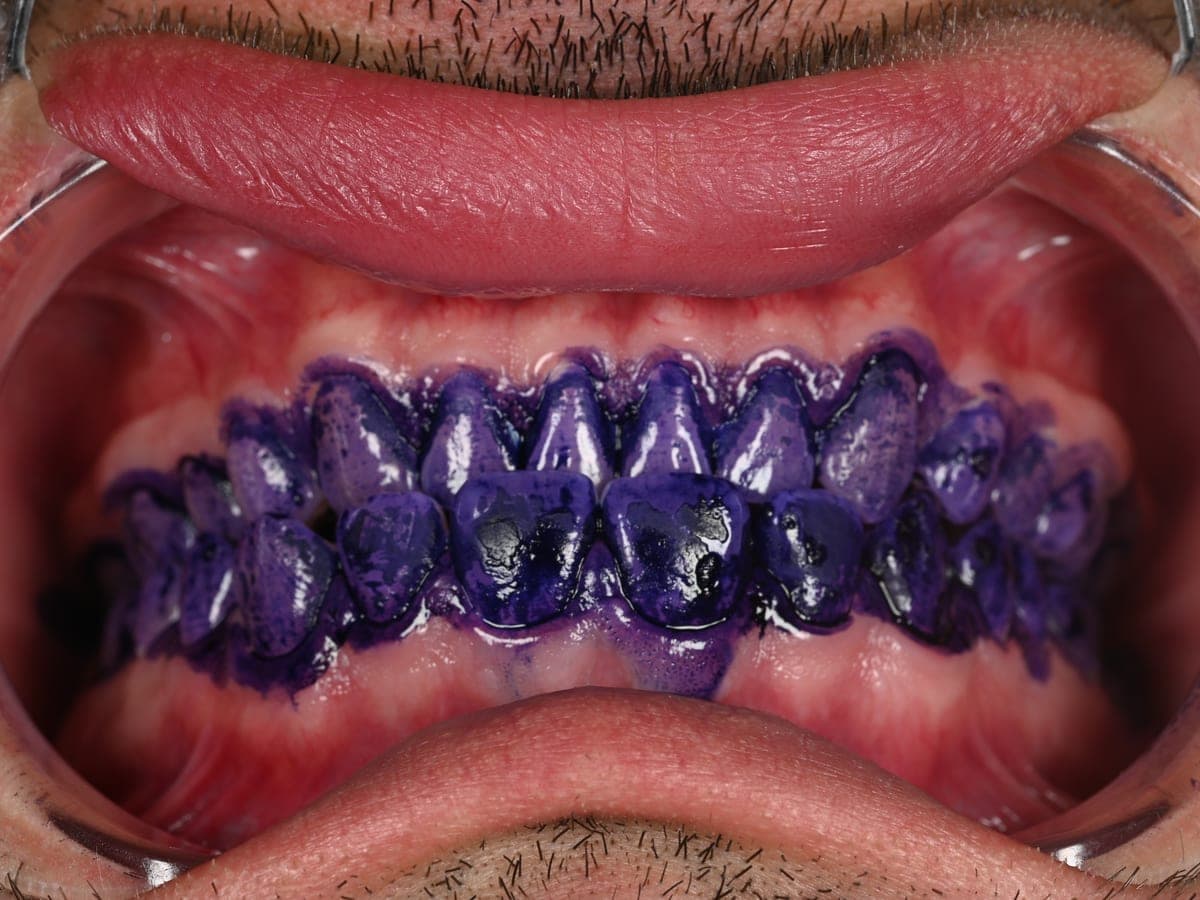
Step 1 · 5 min
We apply a dye that reveals biofilm where it accumulates, to guide the cleaning precisely.
Step 2 · 20 min
Controlled jet of air, warm water, and erythritol powder that removes biofilm and stains without scraping.
Step 3 · 10 min
If mineralized calculus is present, we use Piezon (next-generation ultrasonic) precisely and non-invasively.
Step 4 · 5 min
We review the result, apply fluoride when indicated, and define the maintenance frequency.
Not directly. Airflow removes surface stains so the tooth's natural color shows with more luminosity. To change the actual tooth color, professional whitening is needed, often done in the same appointment after Airflow.
No. That's one of its main advantages. No mechanical scraping and no intense vibration. Patients with dental sensitivity can have a full cleaning without discomfort.
Yes. The erythritol powder we use is low-abrasion and specifically formulated to be safe on titanium, ceramic, and composite surfaces. In fact, it's the recommended technique for implant maintenance.
Generally every 4 to 6 months to maintain gum health and aesthetics. Patients with orthodontics, implants, or high consumption of coffee, wine, or tobacco benefit from shorter intervals.
The first session always includes an evaluation: it is the opening step of the GBT protocol and what allows the treatment to be indicated properly. After that first visit, maintenance sessions are scheduled at the frequency defined in your plan. This continuity model, with a limited schedule and one treating team, is how we run every treatment at the clinic.
Yes. There's no recovery time. We just recommend avoiding highly pigmenting foods (coffee, red wine, beetroot) during the first 2 to 4 hours to make the effect last longer.
Yes, and it's particularly recommended. Airflow GBT prophylaxis with erythritol powder is low-abrasion, with no metal contact or intense vibration, which makes it much more comfortable and tolerable for pediatric patients than conventional prophylaxis with curettes or ultrasound. We indicate it as part of the preventive protocol in children from about age six, and it's especially useful in patients with brackets or orthodontic appliances where hygiene is more challenging.
Book your appointment via WhatsApp. Our team answers, not a bot.
BOOK APPOINTMENT